HattiWatt
Cold winter and high prices - which electricity contract makes sense?
Hard winter frosts have once again shown how sensitive the electricity market can be. When the need for heating rises quickly, consumption increases and electricity prices react immediately. At the same time, production does not always keep up with demand, and this winter has been especially windless in many areas. In some situations wind turbine blades have even frozen, reducing production further. Finland is part of the Nordic electricity market, where electricity is both imported from and exported to neighboring countries. These transfers also affect the price. When consumption rises and production falls, electricity prices increase, and households see that directly in their bills.
In this situation many people wonder whether they should stay with spot-price electricity or move to a fixed-price contract. There is no single right answer for everyone. The choice depends on everyday routines, consumption habits and how much you want to react to price changes. What matters most is that the decision is based on information rather than guesswork.
Spot-price electricity follows the exchange price, which can vary significantly during the day and between seasons. When prices are low, spot electricity can be a very affordable option. On the other hand, price spikes can quickly raise the bill if consumption has not been moved to cheaper hours. This is where HattiWatt can be genuinely useful: it makes it easy to see when electricity is inexpensive and when consumption should be reduced.
With a fixed-price electricity contract, the price remains the same for the contract period. This brings predictability and peace of mind because the bill does not follow market price swings. A fixed contract may feel attractive especially when spot prices are high or the market is uncertain. HattiWatt helps users understand price development over time, making it easier to judge how attractive a fixed contract is.
Alongside traditional spot and fixed-price contracts, consumption-impact contracts, also known as hybrid contracts, have become more common. In these contracts, the electricity price is partly tied to the exchange price, while the contract encourages users to shift consumption to cheaper hours. The aim is to combine the flexibility of spot electricity with the predictability of a fixed price. This can suit households that can move laundry, dishwashing or electric car charging to cheaper hours but do not want to rely entirely on spot-price fluctuations.
Electricity price variation can also be managed with demand flexibility. This means moving electricity use to times when electricity is cheaper. It can significantly reduce the bill, especially with spot-price or consumption-impact contracts. HattiWatt makes demand flexibility easier by offering a clear view of price changes and the current market situation.
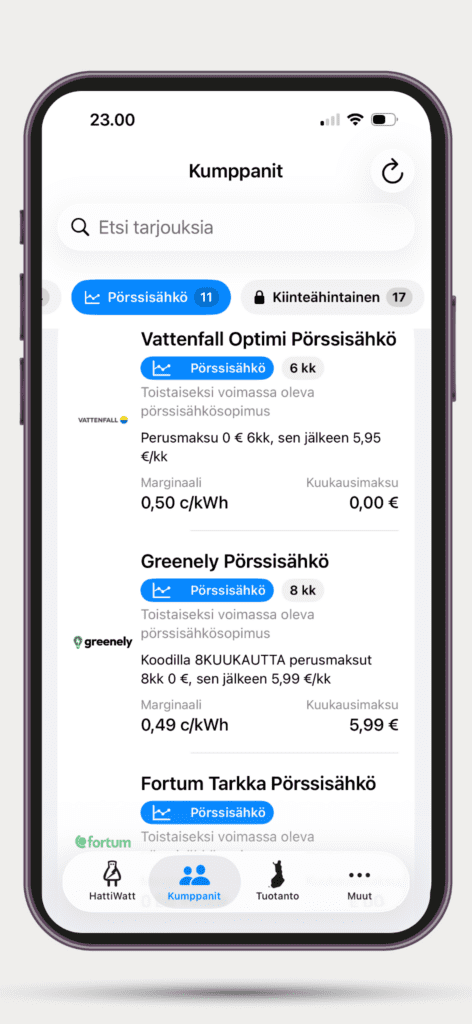
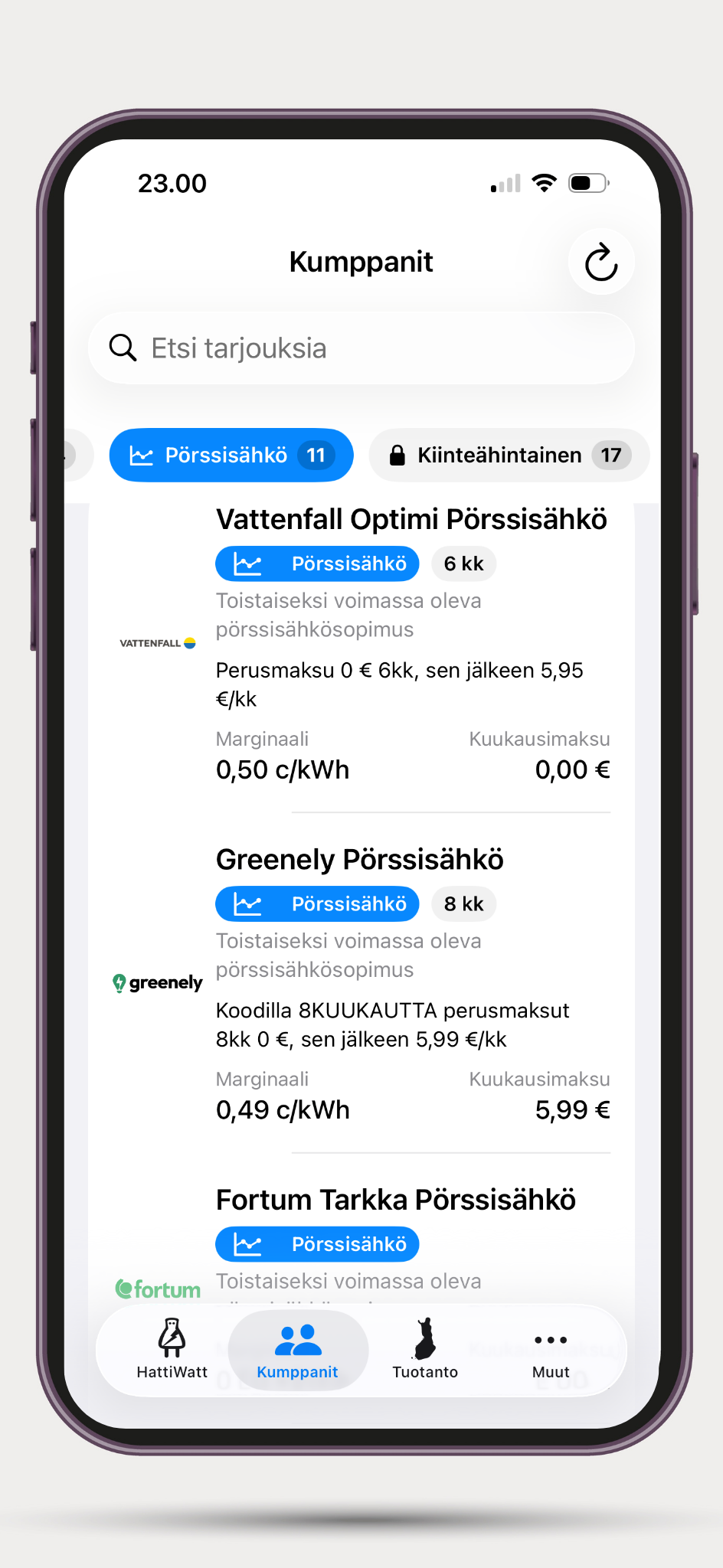
HattiWatt has been updated with a new Partners page, where electricity contracts from partner companies are grouped by contract type. This makes it easier to browse and compare spot, fixed and consumption-impact contracts according to your own situation. Partner contracts can be found both on the HattiWatt website and directly in the HattiWatt app.
This winter has shown that the electricity market can change quickly. The most important thing is not to find one correct contract for everyone, but to find the best solution for your own household. HattiWatt is built for that: it helps you follow electricity prices, understand the market situation and compare contract options calmly.
If you have not downloaded HattiWatt yet, now is a good time. When you follow electricity prices with HattiWatt, you are better prepared for future winters, whatever they bring.
Winter greetings from Maria @HattiWattapp